







WASTE HEAT RECOVERY SYSTEMS FOR DEMANDING INDUSTRIAL AND COMMERCIAL EXHAUST
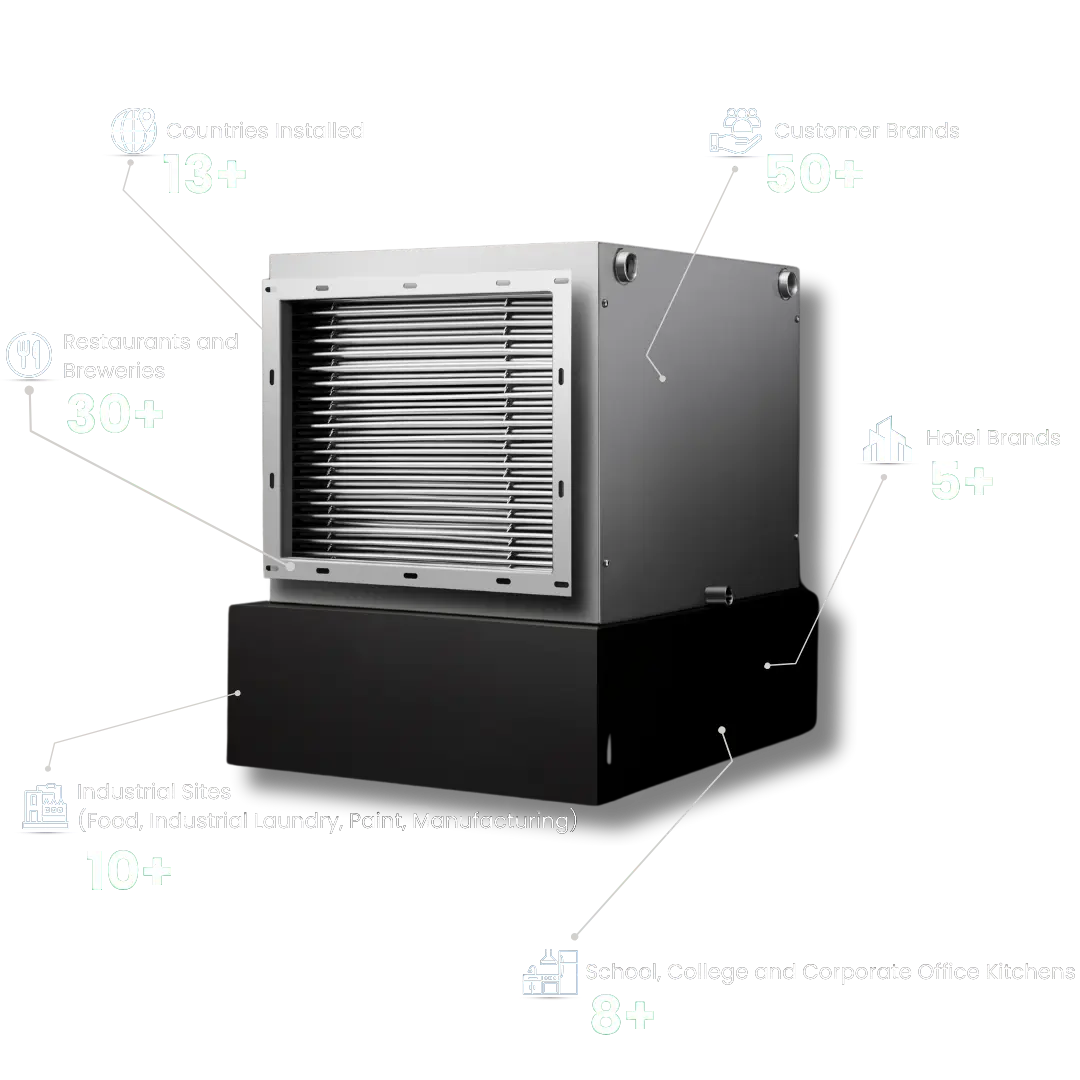
A ThermStar™ waste heat recovery system recovers thermal energy your facility has already purchased and produced, then delivers that energy to a useful thermal demand elsewhere in the operation.
Industrial waste heat recovery systems built for particle‑laden exhaust
A ThermStar waste heat recovery system captures thermal energy that a facility has already purchased and produced, then transfers that energy to a useful demand elsewhere in the operation.
ThermStar™ reduces purchased energy, lowers operating costs, and reduces emissions.
Many industrial waste heat recovery systems perform well in clean air but become difficult to maintain when exhaust contains lint, dust, grease, moisture or other particles. ThermStar addresses these demanding conditions with patented Lepido technology that includes a unique Particle Repellent Geometry. Its finless geometry encourages particles to pass the heat exchanger instead of accumulating on dense heat transfer surfaces. This approach supports consistent airflow patterns, stable pressure drop and useful long-term performance.
A complete path from opportunity to verified performance
ThermStar supplies integrated solutions that combine commercial and industrial heat recovery equipment with technical evaluation, system configuration, implementation support, process controls, monitoring and measurement.
Recovered at the source. Delivered where it is needed.
The source-side recovery unit connects through a closed fluid loop to one or more HeatCore Hx™ delivery units. Recovered thermal energy can be delivered to process air, makeup air, process or wash water, boiler feedwater, space heating, or other suitable thermal demands.
Measured, not assumed.
ThermStar™ Power Intelligence can provide controls, alarms, operating data, and performance visibility. Customers may use this visibility to understand system status, review trends, and document recovered energy.
Operating in Plants, Laundries, Hotels and Commercial Kitchens in 13 Countries.
-
-
-
-
-
-
- VOLVO
- DE BRUYN
-

-

-

-

-

-

-

-

-

-

-

-

-

-

- DISHOOM
-

-

-

-

-

-

-

-

-

-

-

-

-

-

-

-

-

-

-

-

-

-

-

-

-

-

-

Representative customer logos are shown for illustrative purposes. At least one installation utilizing Lepido® heat recovery technology has been completed or is in process at a facility associated with each organization displayed.
Let’s identify the opportunity
The first step is a complimentary desktop Thermal Energy Opportunity Screen. ThermStar™ reviews your exhaust source(s), operating profile, and potential uses for recovered energy to identify where an opportunity exists and whether it warrants further evaluation. We work with the information available today and identify any additional data needed for the next step.
Why long term performance matters
Projected savings only matter if the system can sustain them. In a demanding foundry application, Lepido® operated for 60 weeks in a particulate-laden exhaust stream before cleaning was required. ThermStar™ is built for long-term performance. More than a decade of field experience and 260+ installations of the technology worldwide demonstrate performance under real operating conditions.

Waste heat recovery solutions across industries
Wherever hot exhaust and a useful thermal demand exist, there may be an opportunity to recover and reuse that energy. ThermStar™ applies the same assessment process across industries to identify the strongest opportunities. From a single exhaust source to a multi-facility network, the system can be configured around the application.
Industrial Laundry
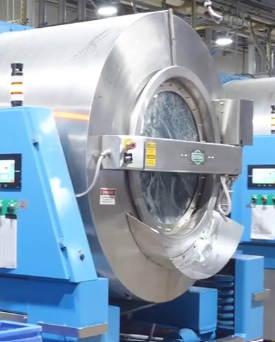
Recover heat from lint laden dryer exhaust and cut natural gas costs. Built for the conditions that make conventional laundry heat recovery fail.
Food Manufacturing
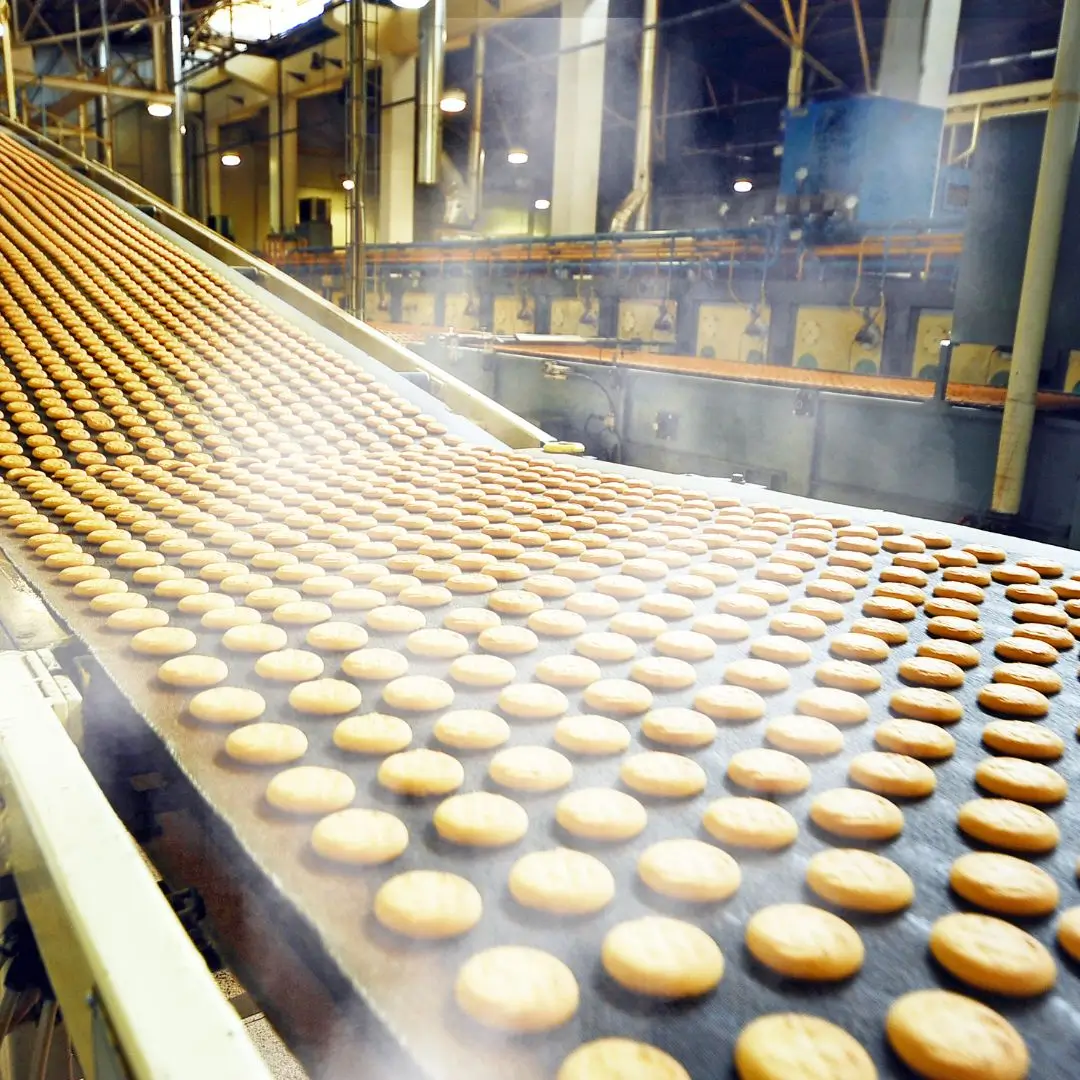
Recover energy from oven, cooking and process exhaust in food manufacturing, including humid and particulate laden streams that foul conventional units.
Pet Food Manufacturing
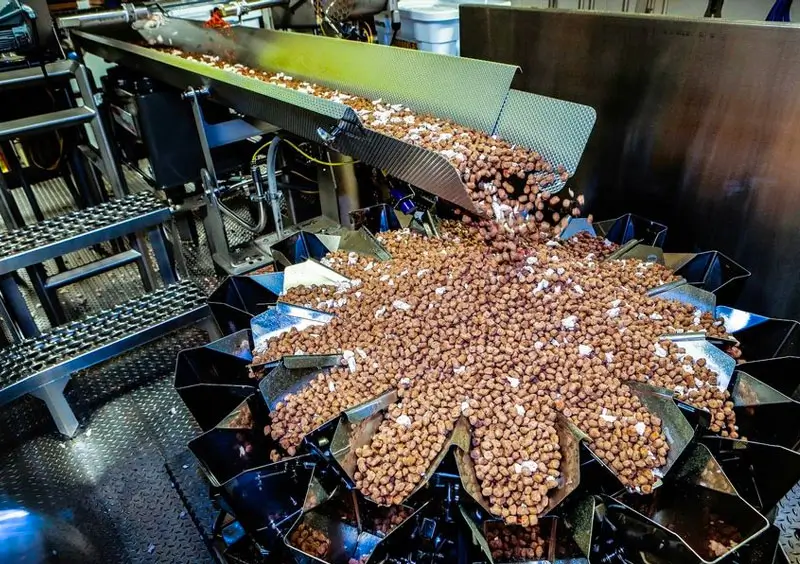
Extrusion, drying and rendering exhaust carries recoverable energy along with moisture and particulate. See how ThermStar handles these conditions.
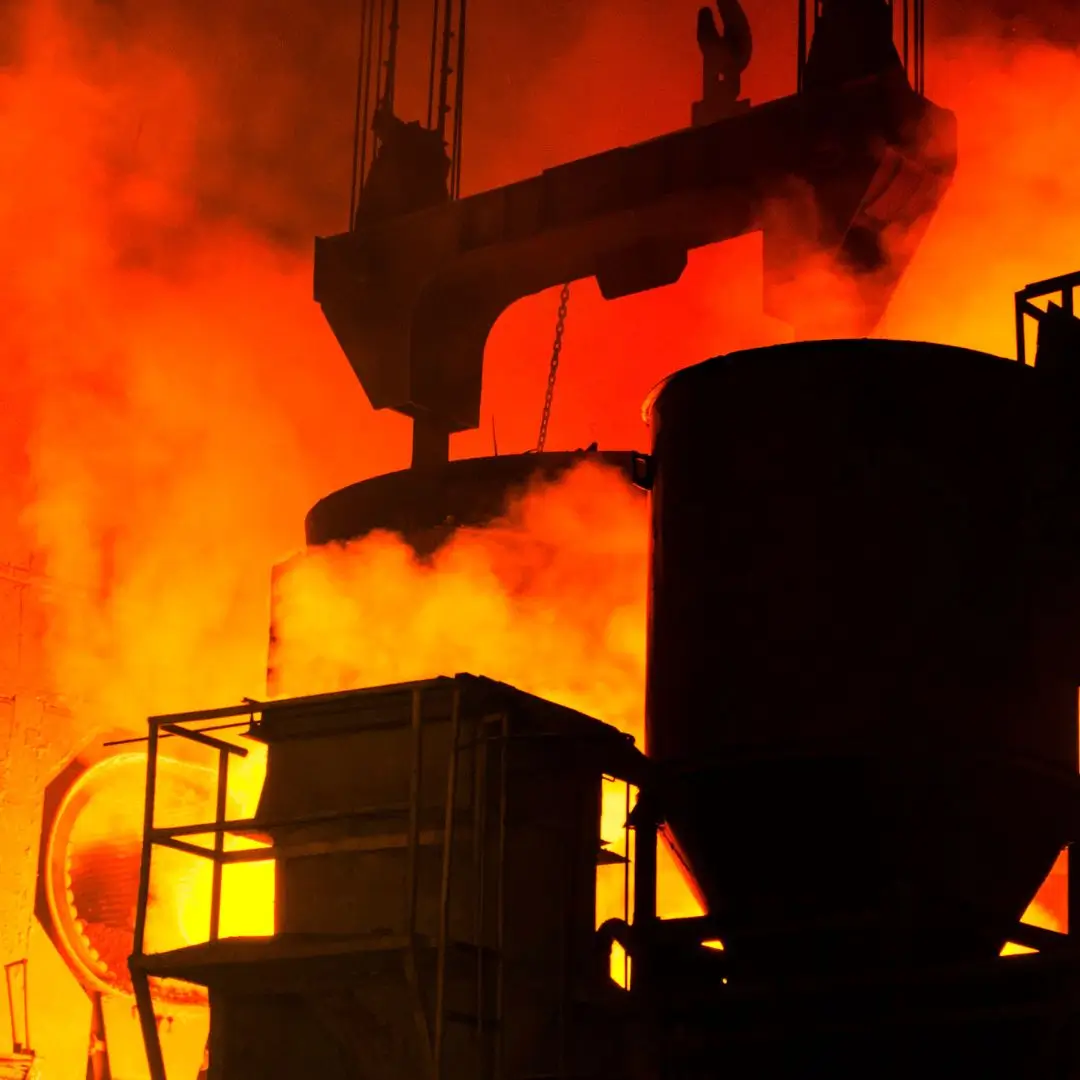
Foundries
Recover useful thermal energy from furnace and process exhaust in foundry operations, in conditions where conventional recovery is hard to maintain.
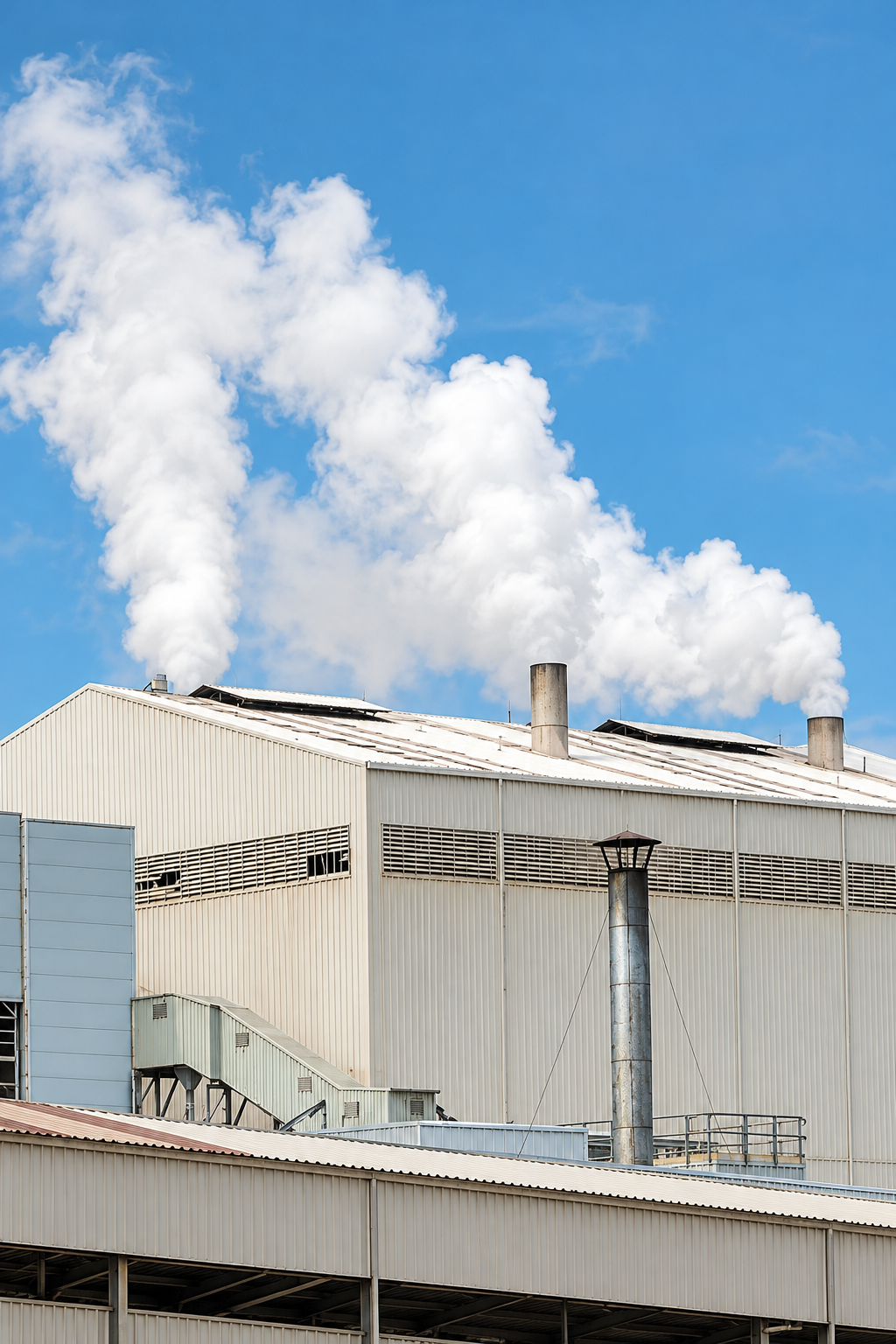
Manufacturing
Turn exhausted thermal energy into lower operating costs and reduced emissions across manufacturing operations and multiple facility networks.

Restaurants & Commercial Kitchens
Grease laden kitchen exhaust carries energy worth recovering. The technology behind ThermStar was developed for exactly these conditions.
1 / 6
Proven. Measurable. Sustainable. Dirty Air. Clean Energy.
GLOBAL INSTALLED IMPACT SINCE 2021.
Based on aggregated performance of the global installed Lepido® heat recovery fleet.
Average system age: ~5 years · Energy blend: 60% Gas / 40% Electric
Total Energy Savings
165,000,000 165,000,000 kWh
5,631,400 5,631,400 therms
Total energy saved
CO₂ Reduction

26,015 26,015 metric tons
57,352,423 57,352,423 lbs CO₂
Estimated 5-year CO₂ reduction
Environmental Equivalent

30,400 30,400 acres of forest
5-year CO₂ reduction = one year of CO₂ sequestration
Continuous Energy Recovery

- Operates independent of weather conditions
- More exhaust heat = more recoverable energy
Low Deployment Risk

- Minimal permitting complexity
- Designed for retrofit and new-build applications
Measurable & Verified

-
Cloud-connected ThermStar Power Intelligence™
- Real-time performance monitoring
- Decarbonization reporting

Two restaurants. Same four weeks. One had a Lepido
Burger King UK tracked daily electricity at two restaurants from February 9 to March 5, 2024. Both warm incoming make-up air with an electric heater coil. At Welwyn Garden City, a Lepido® recovered heat from kitchen exhaust to do that job instead.
THE RESULT: Recovered heat supplied 100% of the make-up air heating demand, eliminating electric heater use that represented 11% of total site electricity
Daily electricity, February 9 to March 5, 2024 · total site vs. Electric Heater Coil (kWh/day)
| Day | Total site | Heater coil | Share |
|---|---|---|---|
| 9 Feb | 822 | 82 | 10% |
| 10 Feb | 845 | 93 | 11% |
| 11 Feb | 827 | 99 | 12% |
| 12 Feb | 897 | 126 | 14% |
| 13 Feb | 840 | 101 | 12% |
| 14 Feb | 738 | 44 | 6% |
| 15 Feb | 713 | 29 | 4% |
| 16 Feb | 755 | 60 | 8% |
| 17 Feb | 755 | 60 | 8% |
| 18 Feb | 705 | 49 | 7% |
| 19 Feb | 755 | 76 | 10% |
| 20 Feb | 741 | 59 | 8% |
| 21 Feb | 826 | 74 | 9% |
| 22 Feb | 860 | 112 | 13% |
| 23 Feb | 896 | 116 | 13% |
| 24 Feb | 898 | 108 | 12% |
| 25 Feb | 910 | 118 | 13% |
| 26 Feb | 938 | 122 | 13% |
| 27 Feb | 903 | 117 | 13% |
| 28 Feb | 880 | 97 | 11% |
| 29 Feb | 888 | 98 | 11% |
| 1 Mar | 915 | 128 | 14% |
| 2 Mar | 910 | 109 | 12% |
| 3 Mar | 906 | 118 | 13% |
| 4 Mar | 871 | 87 | 10% |
| 5 Mar | 879 | 97 | 11% |
The electric heater coil ran every day, using 4–14% of daily site electricity and 11% across the period.
Daily electricity, February 9 to March 5, 2024 · total site vs. Electric Heater Coil (kWh/day)
| Day | Total site |
|---|---|
| 9 Feb | 498 |
| 10 Feb | 448 |
| 11 Feb | 433 |
| 12 Feb | 473 |
| 13 Feb | 466 |
| 14 Feb | 460 |
| 15 Feb | 481 |
| 16 Feb | 510 |
| 17 Feb | 492 |
| 18 Feb | 498 |
| 19 Feb | 521 |
| 20 Feb | 495 |
| 21 Feb | 542 |
| 22 Feb | 491 |
| 23 Feb | 553 |
| 24 Feb | 515 |
| 25 Feb | 427 |
| 26 Feb | 508 |
| 27 Feb | 466 |
| 28 Feb | 502 |
| 29 Feb | 458 |
| 1 Mar | 506 |
| 2 Mar | 502 |
| 3 Mar | 479 |
| 4 Mar | 511 |
| 5 Mar | 421 |
The electric heater coil drew no electricity on any day of the test. Heat recovered from kitchen exhaust covered the full make-up air heating l
What information is needed to start a waste heat recovery assessment
Basic company, facility, industry, contact, and application information is enough for the first conversation. Photos, utility bills, equipment records, and specifications are helpful when available, but they are optional at the screening stage. ThermStar identifies the detailed operating data needed only after the opportunity appears worth evaluating.
How long does a waste heat recovery assessment take
Timing depends on the complexity of the source, the availability of facility data, and the number of project participants. A simple screen can move quickly. A technical assessment takes longer when operating conditions, equipment interfaces, or receiving loads require confirmation. ThermStar defines the next information request at each stage.
Does a ThermStar assessment commit a facility to a project
No. The early process is intended to determine whether further evaluation makes sense. A customer decides whether to advance after reviewing the available findings, information gaps, likely configuration, responsibilities, and preliminary economics.
Who completes the engineering and installation work
ThermStar supplies approved components, system technology, and the related support stated in its proposal. Qualified engineers, specifiers, contractors, manufacturers, and other project professionals remain responsible for their assigned scopes, approvals, permits, code compliance, and field work.